


A deep dive research on what’s at stake in November
AB: Check out the risk matrix at bottom of research to see how it impacts your sector.
The 2026 midterm elections will determine control of both chambers of Congress at the midpoint of President Donald Trump’s second term. Their outcome will shape Trump’s governing capacity during his final two years in office, affecting legislative agenda, appointments, and oversight intensity. This analysis examines the current balance of power, the structural dynamics that typically shape midterm contests and the most likely outcomes for the House and Senate in November.
Republicans currently hold a narrow 218-214 majority in the House and a 53-47 majority in the Senate. Such slim margins create significant potential for shifts in control. Historical patterns and current indicators, particularly presidential approval, suggest an elevated risk of Republicans losing the House in the upcoming midterms. The results will shape the final two years of Trump’s presidency, determining his ability to advance legislative priorities, make appointments, and defend against oversight.
This research analyzes the institutional and constitutional significance of House and Senate control, seat math, historical patterns, current polling indicators, and evaluates how redistricting may affect electoral competitiveness. This research looks at the following:
- Current State of Congress and Constitutional Significance: Baseline party alignment and why House vs. Senate control matters for policy, confirmations, and oversight.
- 2026 House Elections: Seat Reality, Redistricting, and Baseline Outlook: Redistricting impacts, polling signals, historical midterm trends, and control scenarios.
- 2026 Senate Elections: Seat Reality and Baseline Outlook: The 33 seats at stake, map asymmetries, current indicators, and control scenarios.
- Policy and Governance Implications: If Democrats Win the House: Legislative dynamics, oversight intensity, and the constraints on Trump administration execution.
- Split Congress: Democrat House and Republican Senate: Effects of divided control on legislation, confirmations, and policy uncertainty.
- Voter Issues: The Top Three Drivers in 2026: Inflation and affordability, the labor market, and immigration.
Understanding the current institutional balance of power provides essential context for evaluating how power might shift in November 2026.
The significance of the 2026 midterms extends beyond party control. The elections will shape how the constitutional system functions in practice during the latter half of President Trump’s second term. It will likely determine whether governance is defined primarily by legislation, oversight, judicial appointments, or executive action. Understanding these institutional dynamics is essential for evaluating political risk, policy durability, and the broader operating environment for markets, businesses, and long-term strategic planning.
Warning!
Our goal is to remain objective with this research. While this may be challenging for those with passionate views, we do our best to provide clear-eyed analysis to enable understanding and enhance decision making into 2026 and beyond.
Things are changing fast and we want our readers to stay on top of it. Here are two aspects to watch carefully.
- Texas state senate race was won by a Democrat for 1st time since 1992.
- FBI taking 2020 Fulton County ballots with DNI Gabbard on hand and President Trump calling for “nationalized” elections.
With all politics, we ask our readers to be curious. Read both NYT and WSJ, watch both FoxNews and CNN, listen to both Joe Rogan and Ezra Klein.
Please step out of the echo chambers, do your homework, make informed decisions.
Current State of Congress and Constitutional Significance
A. U.S. House of Representatives: Membership and Control
As of January 2026, the House consists of 218 Republicans, 213 Democrats, and 3 vacant seats. Republicans retained their majority in the 2024 elections, resulting in one of the narrowest margins in modern congressional history. You can see this in Figure 1 below:
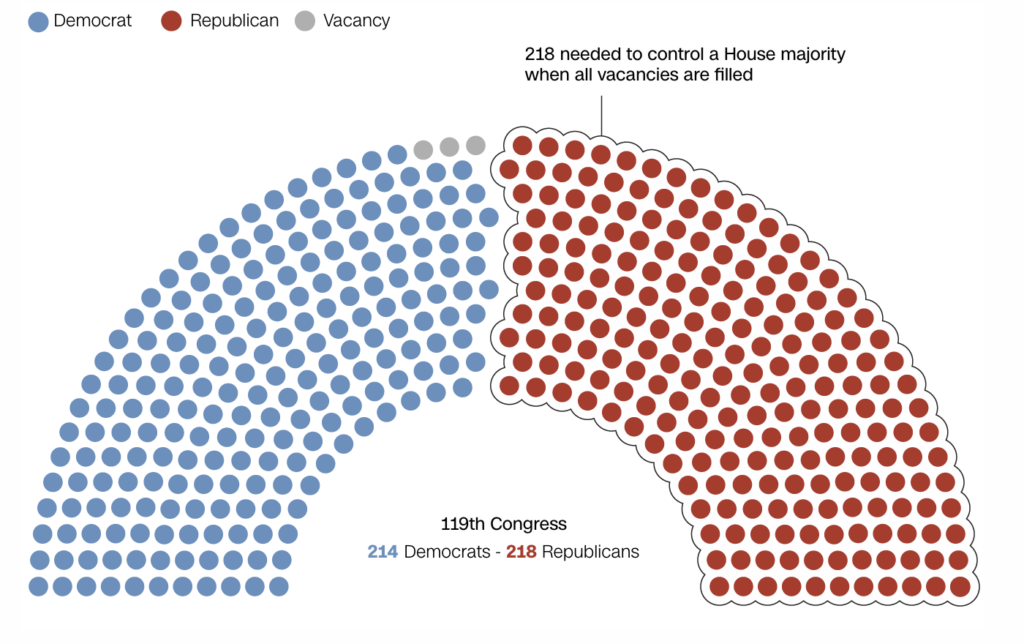
Figure 1. CNN
The House holds constitutional importance for three primary reasons. First, it possesses exclusive authority over revenue, commonly referred to as “the power of the purse”. This grants the House primary control over federal taxation and spending as all federal expenditures require congressional approval originating in the House.
In addition, House committees exercise subpoena power to compel testimony and documents from the executive branch. This oversight authority enables the House to scrutinize executive actions and, through appropriations and conditions on funding, slow or constrain policy implementation.
Finally, the House has the sole power to impeach federal officials, including the president. While the House initiates the impeachment process, the Senate conducts the subsequent trial.
B. U.S. Senate: Membership and Control
The Senate consists of 53 Republicans, 45 Democrats, and 2 Independents who both caucus with the Democrats. Republicans secured a six-seat majority after flipping four net seats in the 2024 elections. This gives Republicans unified control of both chambers for the first time since the 115th Congress (2017-2019). You can see the Senate membership in Figure 2 below:
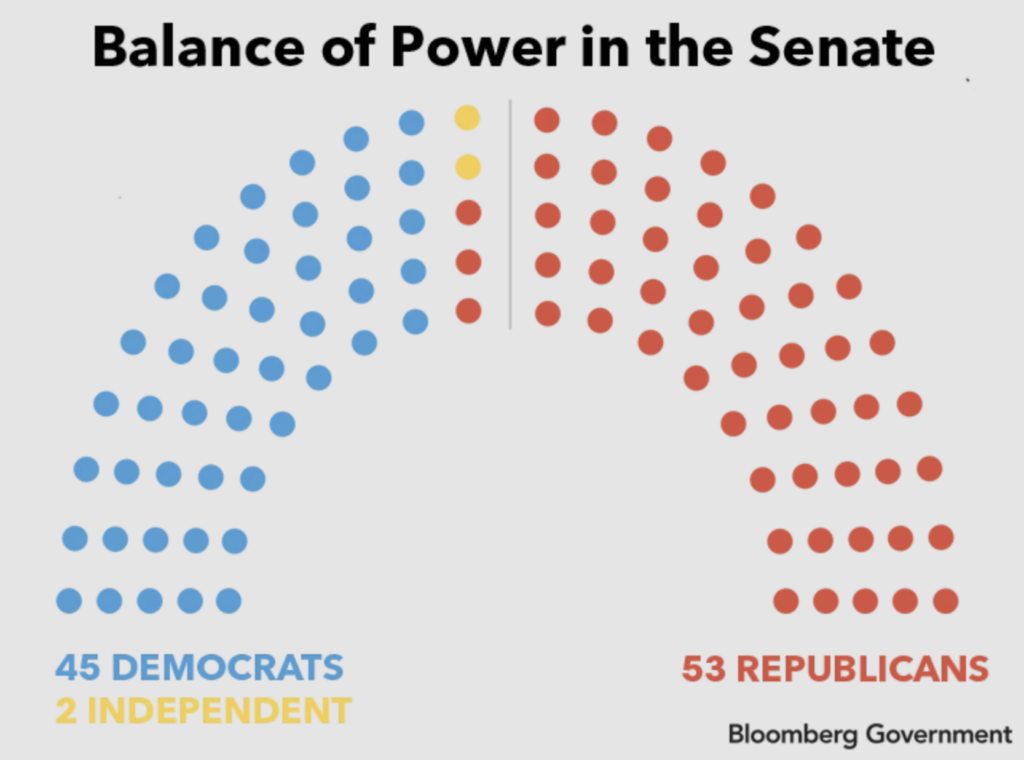
Figure 2. Bloomberg Government. Balance of Power in the Senate.
The Senate’s constitutional role centers on its advice-and-consent powers. It consents to nominations of Ambassadors, other public Ministers and Consuls, Judges of the Supreme Court, and all other Officers of the United States. This means the Senate decides who is in the executive branch and the judiciary.
This is particularly important when it comes to the judiciary, because judges are given lifetime tenure. They can only be removed through complex and lengthy impeachment processes. As a result, a single presidency and Senate can shape legal interpretation and public policy in the US for many decades. This dynamic has been evident in recent years with decisions such as the overturning of Roe v Wade in the case of Dobbs v. Jackson Women’s Health Organization, after conservative judicial appointments under the previous Trump presidency.
In addition, the Senate also approves international treaties and conducts impeachment trials initiated by the House. While both the House and the Senate are important, their distinct constitutional powers give them different influence over policy, economics, governance, and response to voters’ issues.
C. Why Institutional Differences Matter for Markets, Policy, and Business Risk
The distinct constitutional powers of each chamber influence policy outcomes in different ways. First, House control shapes federal funding through appropriations bills and continuing resolutions, as well as the scope and intensity of oversight through investigations and hearings. Even though bills need to be approved by the Senate, the House can still indicate policy priorities by determining which bills advance.
House control also affects volatility around fiscal deadlines, as demonstrated by recent government shutdown negotiations. When the House and Senate are controlled by different parties, or even during intra-party disputes, the risk of lapses in funding increases, which leads to unpredictability.
By contrast, the Senate’s decision-making powers have a more direct impact on regulatory implementation and long-term policy direction. Judicial appointments have generational impacts that can extend well beyond an individual administration.
However, over time, the expansion of executive power through presidential directives, executive orders, and administrative actions has increasingly weakened Congress’s policymaking role, with the Trump administration’s extensive use of unilateral executive authority further accelerating this trend. Nonetheless, the intensity of congressional oversight still varies dramatically depending on whether the presidency and Congress are aligned or divided.
The narrow margins in both chambers highlight how quickly party control can change, and the impacts it can have. The Republicans hold only narrow majorities; small shifts in either direction in either the House or Senate can significantly alter governance dynamics for the remainder of Trump’s second term.
3. 2026 House Elections: Seat Reality, Redistricting, and Baseline Outlook
All 435 House seats are contested every two years. The current Republican control recently shifted from 219 to a narrow 218-214, meaning that Democrats need a net gain of only 2 seats to win the majority. Control can change quickly when margins are this slim. Vacancies, retirements, special elections, and candidate quality can all shift operational control. In addition, individual members can also gain concessions in exchange for their votes, which can produce unpredictable outcomes when just one or two members could change a result.
As of January 2026, 47 representatives (21 Democrats and 26 Republicans) have announced their retirement. Of these, 26 members (8 Democrats and 18 Republicans) are retiring to run for other offices. This is a record number of open seats at this point in a midterm cycle and increases volatility, as open races are typically more competitive than contests with incumbents. Key determinants of the House elections outcome include redistricting, polling inputs, and historical midterm trends and likelihoods.
A. Redistricting: Why It Still Matters in 2026
Six states have enacted new congressional maps between 2024 and 2026: California, Missouri, North Carolina, Ohio, Texas, and Utah. Collectively, these changes represent one of the largest mid-decade redistricting efforts in modern American history.
Republican-controlled legislatures in Texas, North Carolina, and Missouri passed Republican-favoring maps. In Texas, lawmakers targeted five additional GOP seats despite a federal court’s initial ruling that the map constituted an illegal racial gerrymander. California voters approved Proposition 50, enabling new maps that could yield as many as five Democratic seats. In addition, Virginia passed a constitutional amendment that allows mid-decade redistricting. In Figure 3 below, you can see the results that would arise from the new proposed map for California, if the 2024 presidential election had taken place with the new map:
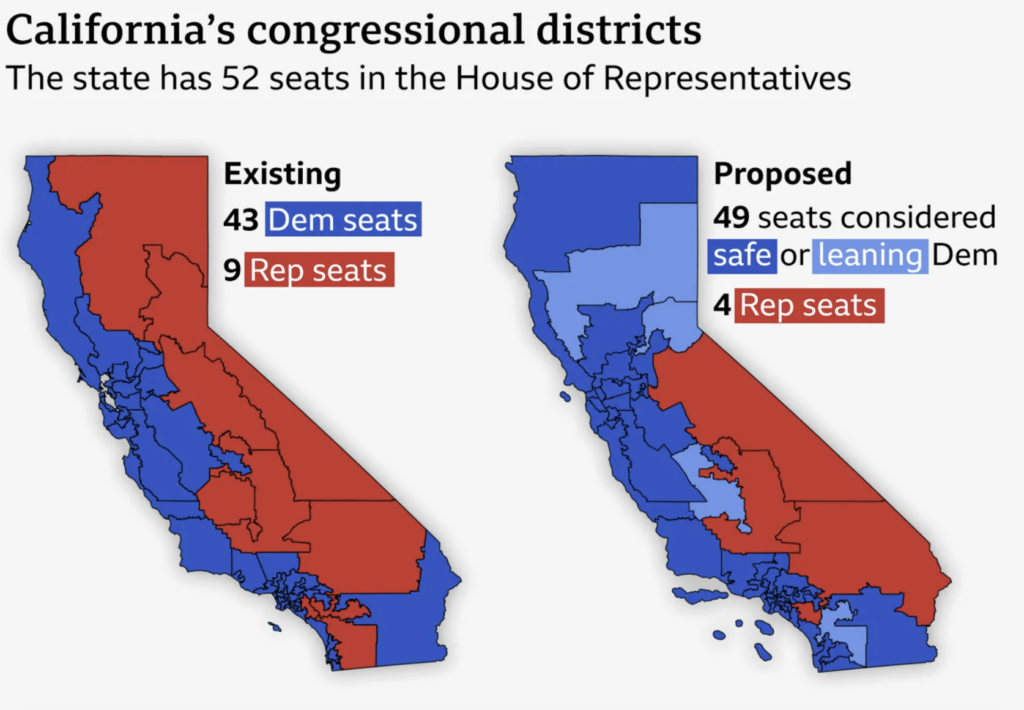
Figure 3. BBC. California’s congressional districts.
Redistricting matters because district lines determine which voters are grouped together, and this impacts whether seats are competitive or safe. As you can see in the image above, redistricting could significantly change the outcome in California.
Redistricting also reshapes the donor and volunteer landscape, where districts that shift from ‘safe’ to ‘competitive’ suddenly attract more campaign resources, stronger candidates, and greater volunteer energy, while previously competitive districts that become safer see resources dry up as national parties and donors redirect their attention elsewhere.
Even small boundary shifts can change partisan composition by several percentage points. Ongoing legal challenges in Georgia, Louisiana, and Texas, along with a pending Supreme Court case involving the Voting Rights Act, could further affect district maps across multiple states.
B. Polling Inputs (House): Generic Ballot as a Directional Signal
The generic congressional ballot measures whether voters intend to vote for a Republican or a Democrat candidate for Congress and serves as a high-level indicator of the national political environment.
As of January 2026, Democrats have a 2 to 4 point advantage in most polls, with RealClearPolitics tracking showing Democrats holding an advantage in their published average. Morning Consult showed Democrats leading 45% to 43% in January, and an NPR/PBS News/Marist Poll conducted in November showed a substantially wider 55%–41% margin in favour of the Democrats. Independents favor Democrats markedly, and prefer them over Republicans with a 33-point difference in the Marist poll. Decision Desk HQ polls Democrats at 46% and Republicans at 41%, as you can see in Figure 4 below:
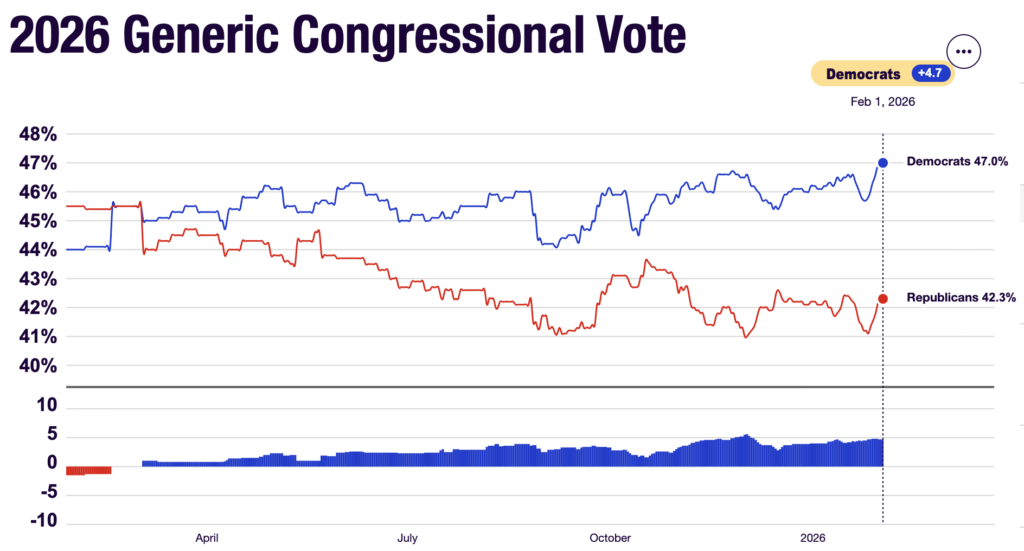
Figure 4: RCP Generic Congressional Ballot
While generic ballot polling provides useful directional guidance, it doesn’t translate perfectly into seat outcomes. District-level factors like candidate quality, local issues, and incumbency can still override national trends. That said, historical models indicate that even small generic ballot advantages can produce significant seat swings when margins are narrow. The effect is less predictable in this cycle, however, as aggressive redistricting by both parties has reduced the efficiency with which national vote shares convert into seats.
C. Historical Perspective: Midterm Gravity
Since World War II, the president’s party has lost House seats in 18 of 20 midterm elections, with an average loss of 26 seats. When presidential approval falls below 50%, average losses increase sharply, ranging between 37 and 43 seats. Only two exceptions have occurred since 1934: first, in 1998, when Republicans overreached trying to impeach Clinton, and in 2002, when heightened post-9/11 support boosted President George W. Bush’s party.
Several factors are behind these patterns. Presidential approval matters most, but inflation and real wages shape voter perceptions of economic management. When voters feel their purchasing power declining despite headline economic growth, they tend to punish the party in power.
Low presidential approval also affects candidate behavior. Data from The Fulcrum show that when presidents are unpopular, members of the president’s party are more likely to resign, increasing the number of open seats and electoral vulnerability.. In Figure 5 below, you can see that in 2006 and 2018, Republican members of Congress left at much higher rates than their Democrat counterparts, because of unpopular Republican Presidents George W. Bush and Trump. Conversely, in 2022 and 2024, the same pattern appears among Democratic members, whose resignation rates increased relative to Republicans amid President Biden’s declining approval:
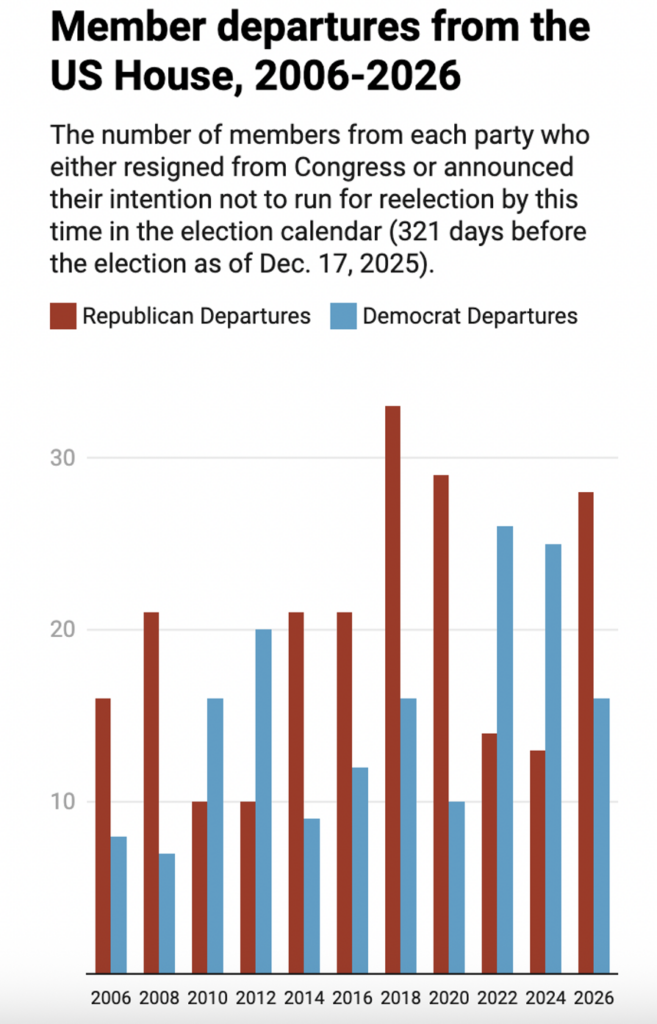
Figure 5. The Fulcrum. Member departures from the US House, 2006-2026.
Turnout dynamics also play a role. For example, the opposition party’s voters are typically more motivated in midterms, creating an enthusiasm gap that compounds the losses of president’s party. Midterm elections can essentially become a referendum on the president’s performance rather than individual candidate qualities, which nationalizes races and has the potential to override local factors.
Presidents typically face difficulties in their second-year midterms, and Trump may face additional challenges due to his unique situation. First, voters have already experienced four years of Trump’s presidency, limiting novelty effects, and constitutional term limits remove the incentive of future presidential runs as a mobilizing force. Combined with low approval ratings in the low-to-mid 40s and persistent economic dissatisfaction, these conditions create unfavorable baseline dynamics for House Republicans (see Figure 6).
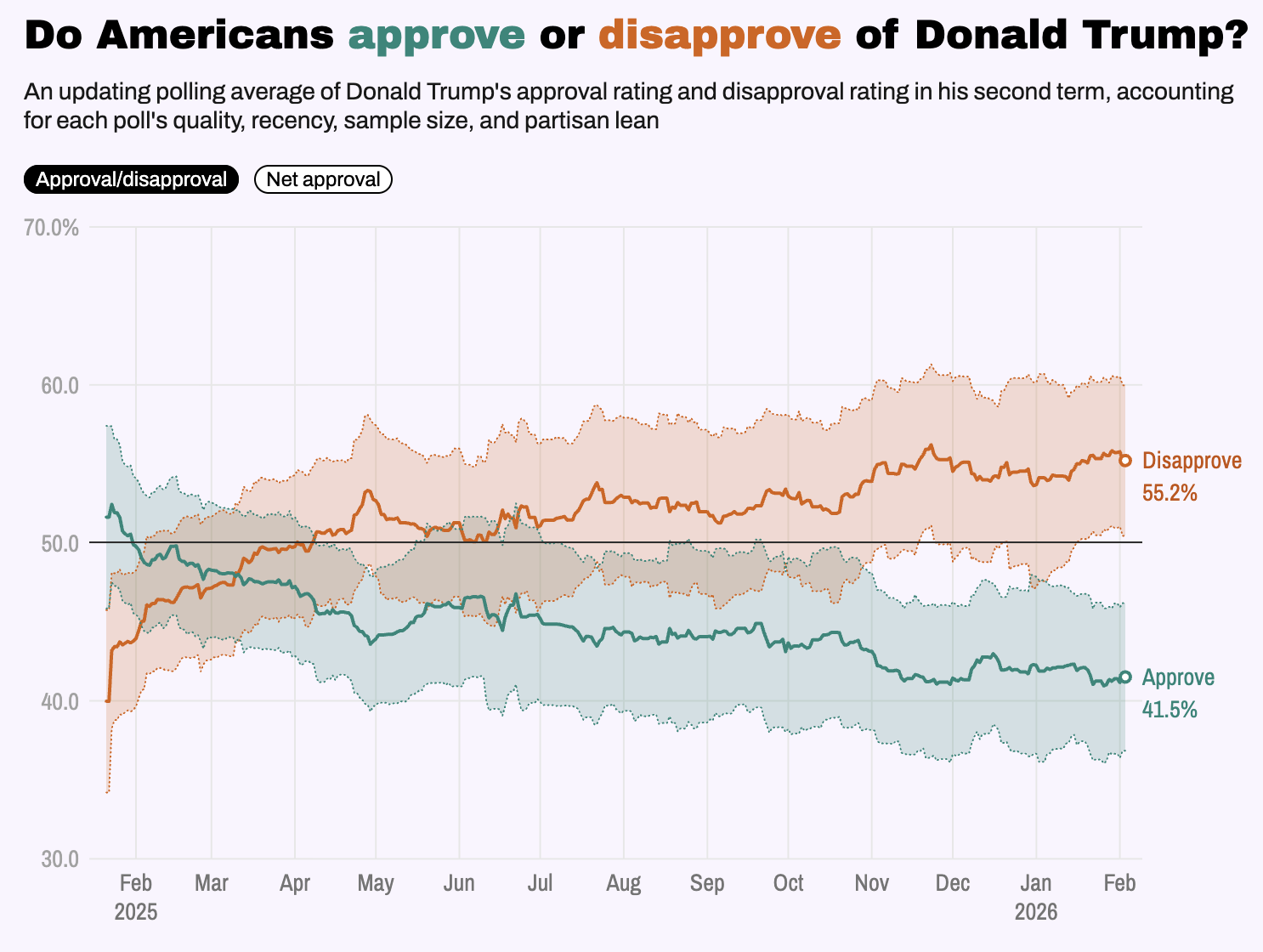
Figure 6. Nate Silver Trump Job Approval Tracking.
These factors have flow-on effects in the House elections.
D. House Control Outlook: Scenario Framing
Now, let’s look at the conditions that would be needed for each potential House scenario to arise.
Scenario H1: Republicans Hold the House
For Republicans to retain control of the House, the national political environment would need to change substantially heading into fall 2026. Trump’s approval ratings would also need to rise, accompanied by economic conditions that voters credibly attribute to his administration.
Republican redistricting in Texas, Missouri, and North Carolina would need to successfully translate into seat gains. Strong incumbency advantages would need to hold in key districts, and GOP base turnout would need to remain high even without Trump on the ballot. In addition, Democrats would need to fail at recruiting high-quality challengers.
This scenario is possible but somewhat unlikely and would break the typical midterm pattern without a clear and exceptional reason.
Scenario H2: Democrats Flip the House
For Democrats to flip the House, Democratic enthusiasm would need to stay elevated while Republican turnout drops. Democrats would need to successfully nationalize the election as a referendum on Trump, recruit high-quality candidates in swing districts, and see suburban voters, particularly women, continue trending Democratic. This scenario shows strong probability based on historical patterns, current polling, and Trump’s approval ratings, and it aligns with historical midterm dynamics.
Key battleground indicators are already pointing toward Democratic advantages. Republicans have retired in high numbers, while Democrats performed better than expected in the 2025 special elections. Special elections can be early indicators of the broader political environment because they reveal which party’s voters are more energized and whether swing voters are breaking toward one side.
Democrats’ good performance in 2025 special elections suggest their voters are more motivated, and swing voters are trending in their direction. However, special elections involve lower turnout and may not align with broader trends.
Additional structural factors reinforce this outlook. Sixteen House Democrats currently represent districts Trump won in 2024, compared with only eight Republicans representing districts won by Harris. At the same time, twenty-six Republicans are retiring to run for other offices, compared with just eight Democrats, which leaves far more open GOP seats to defend.
Despite these indicators, uncertainty remains. First, the generic ballot offers directional insight but does not translate cleanly into seat outcomes, and final redistricting outcomes cannot yet be predicted. In addition, turnout differentials and district-level dynamics can still move in ways that override national trends.
4. 2026 Senate Elections: Seat Reality and Baseline Outlook
A. How Many Seats Are at Stake
The Senate is divided into three classes, with one-third up for election every two years. In 2026, 33 Class 2 seats face regular election, plus two special elections: Florida, filling Marco Rubio’s term after he resigned to become Secretary of State, and Ohio, filling JD Vance’s term after he became Vice President. Republicans are defending 22 seats while Democrats only must defend 13.
Unlike the House, where a national shift can flip dozens of seats, the Senate’s outcome depends heavily on which specific states happen to be voting in any given cycle. A party can face strong national headwinds but still perform well in the Senate if the map favors them. On the other hand, they can ride a national wave but struggle if they’re defending seats in unfavorable territory.
B. Current Senate Control Baseline
Republicans hold a 53-47 majority in the Senate, including two independents who caucus with the Democrats. Democrats need a net gain of four seats to reach 51 and control the chamber, while Republicans can lose no more than three seats and still retain control, with VP Vance serving as the tiebreaker.
Eight Senate incumbents are not seeking re-election, including four Democrats and four Republicans. In addition, one Republican, Tommy Tuberville, is running for Governor in his state, creating another open seat. The most vulnerable Republican-held seats are Maine, where Susan Collins is the only Republican senator up for election in a state won by Harris; North Carolina, an open-seat race following Thom Tillis’s retirement in a key swing state where Democrats have recruited former Governor Roy Cooper; and Texas where John Cornyn faces a competitive primary challenge from Ken Paxton.
On the Democratic side, the most vulnerable Democratic seats are Georgia, where Senator Jon Ossoff is the only Democratic incumbent running in a state won by Trump, and Michigan, which is an open seat following Senator Gary Peters’ retirement in a state Trump won by less than 3 points in 2024. Additional competitive races include New Hampshire, which is an open seat; Ohio, a special election in which former Senator Sherrod Brown is running as the Democratic candidate; and Nebraska, where Republican Senator Pete Ricketts faces independent challenger Dan Osborn.
C. The 2026 Senate Map: Why It Is Asymmetric
The Senate’s three-class system means the 2026 cycle features senators last [GS1] elected in 2020, a presidential election year in which Biden defeated Trump. As a result, many Republicans defending seats in 2026 previously won in a relatively Democratic-leaning national environment, which means they already proved they could win in states where Democrats were competitive.
You can see the map of seats up for Senate election this year in Figure 7 below:
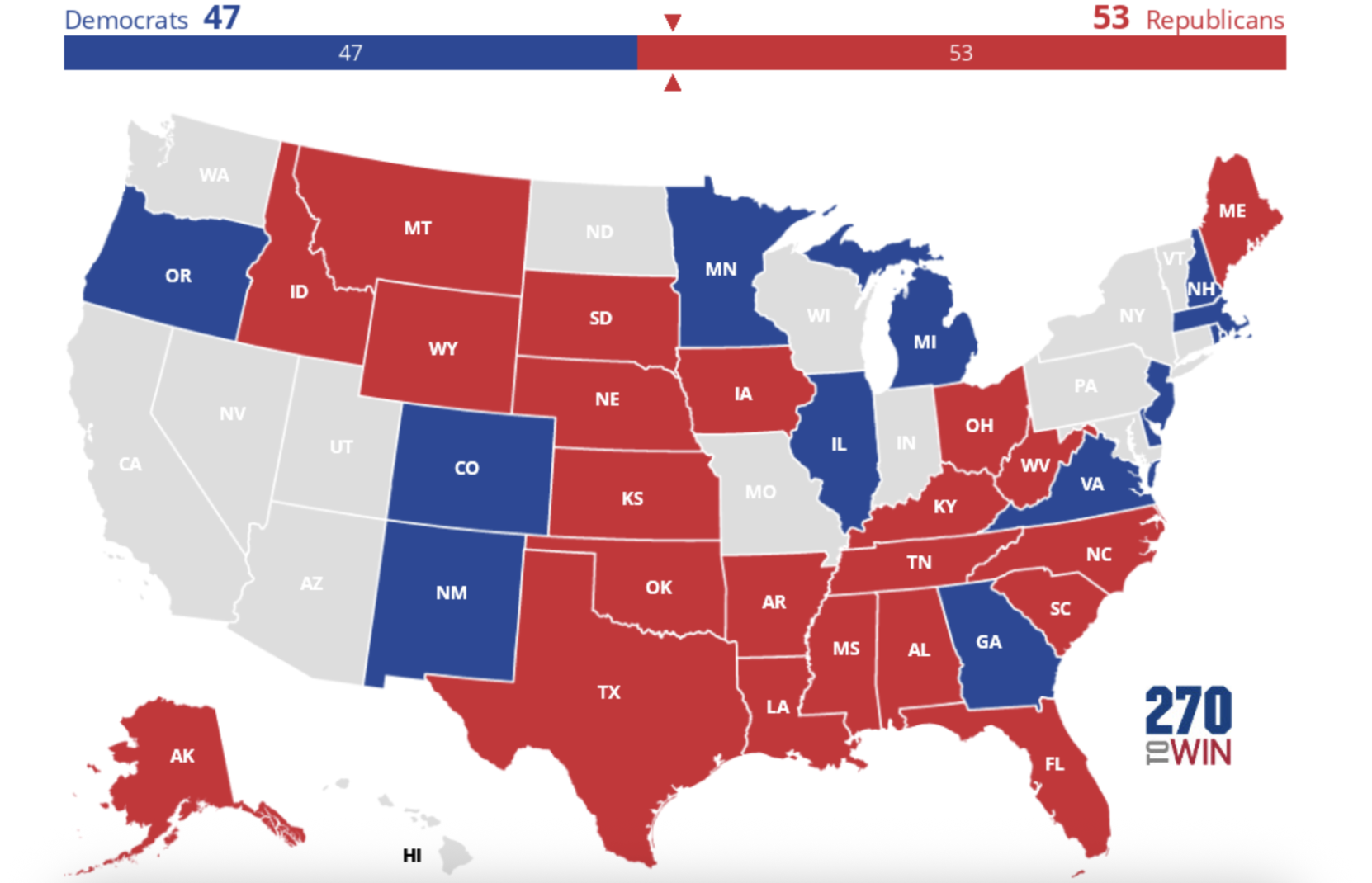
Figure 7. 270toWin. Incumbent Party Senate Map.
By contrast, most Democrats up for re-election are defending seats in reliably blue states where they won comfortably in 2020. This creates asymmetry: Republicans are defending more seats overall, but many are in red states where they have structural advantages. Democrats have fewer seats to defend, but their opportunities to pick up seats would require them to win in states that Trump carried, in some cases by substantial margins.
As a result, the map favors Republicans despite the larger number of seats they need to defend. Most competitive seats are in red or swing states rather than blue states. Only one Republican, Susan Collins in Maine, is defending a seat in a state Harris won, while two Democrats are defending seats in states Trump won.
For Democrats to flip the Senate, they would need to continue to hold all vulnerable seats, including Georgia and Michigan, then flip at least four Republican seats. This requires winning in states Trump won in 2024, and would require exceptional candidates, strong national tailwinds or unique and unexpected local shifts. Republicans, by contrast, need only retain most of their 22 seats and win at least one of Georgia or Michigan. While typical midterm patterns favor the opposition party and create Democratic opportunities, the GOP-leaning geography of contested seats provides significant protection in this election.
D. External Indicators: Probability/Expectation Measures
Beyond polls and historical patterns, prediction markets offer another window into expectations about Senate control. Platforms like PredictIt and aggregators like 270toWin display implied probabilities derived from these markets. As of January 2026, prediction markets generally favor Republicans to retain control of the Senate , with implied probabilities typically ranging from 60-70% for Republican retention depending on the platform and specific contract. You can see in Figure 8 below some examples of safe and toss-up races:
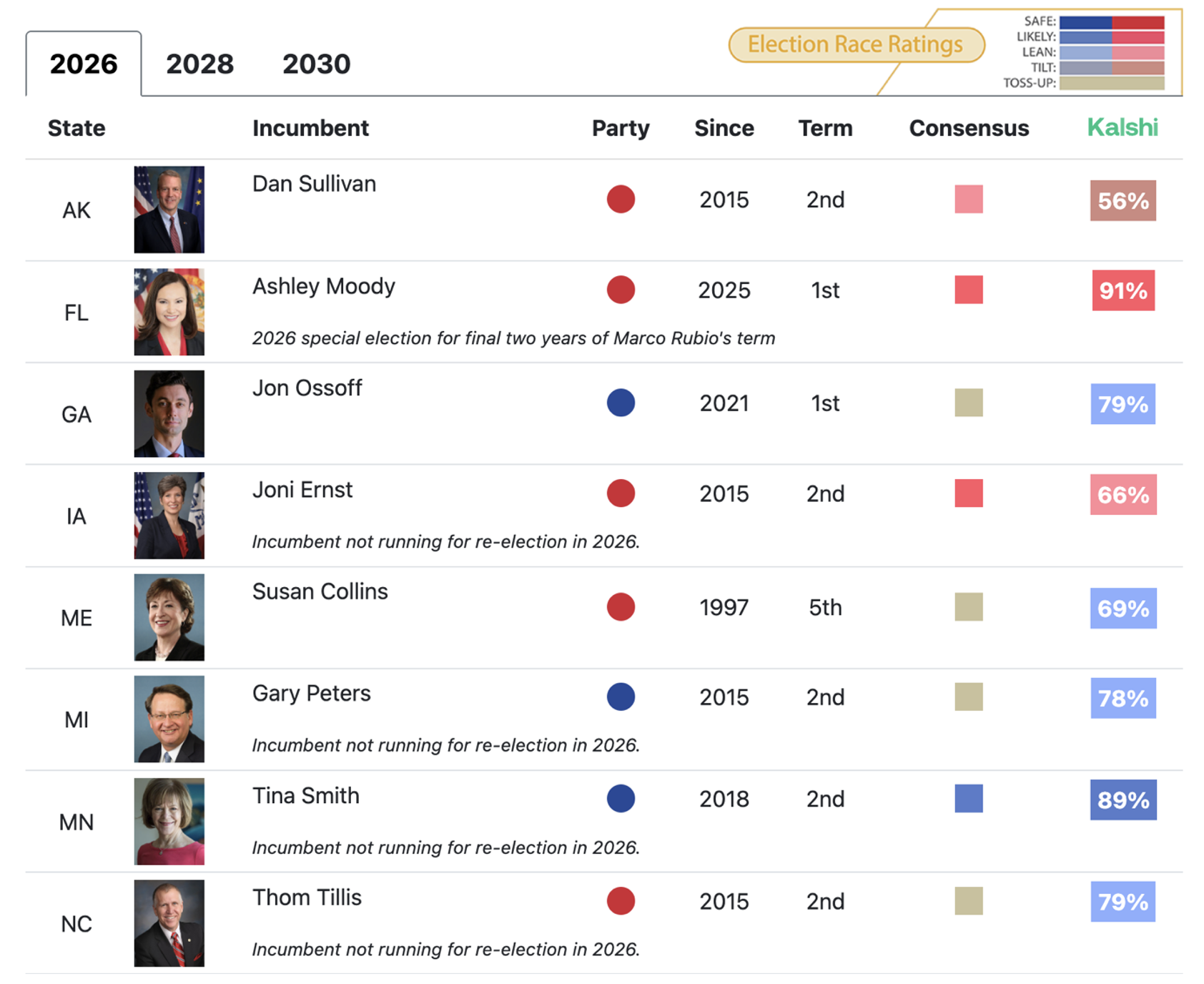
Figure 8. 270toWin. Incumbent Election Race Ratings.
These markets shouldn’t be read as forecasts but rather as snapshots of where informed participants are placing their bets based on available information. They incorporate polling, fundraising, candidate quality, and other factors into a single probability estimate. While prediction markets have some advantages over traditional polls, particularly because participants have financial incentives to be accurate, they also face notable limitations. These include relatively small sample sizes, susceptibility to manipulation, and the tendency for traders to rely on the same public information and polling data used by analysts.
E. Senate Control Outlook: Scenario Framing
Now, let’s go through the Senate control scenarios.
Scenario S1: Republicans Hold the Senate
For Republicans to successfully retain control of the Senate, they would need to hold most of their 22 seats, win at least one of Georgia or Michigan, and see Susan Collins defeat her Democratic challenger in Maine. They would also need their current map advantages to outweigh any unfavorable national political trends.
High-quality candidates would be able to help Republicans in key races, and Trump’s approval would need to stabilize or improve to help down-ballot candidates. This scenario appears more likely than not given the geographic advantages Republicans have this year.
Scenario S2: Democrats Flip the Senate
For Democrats to flip the Senate, they would need to hold both Georgia (Ossoff) and Michigan (open seat), then capture Maine (Collins), North Carolina (open), and at least two additional Republican-held seats. This outcome would require multiple competitive races to break in the same direction, with Trump’s low approval ratings generating significant drag for Republicans. In addition, issues like healthcare and affordability would need to drive significant turnout in key states. High turnout driven by issues such as healthcare and cost-of-living pressures would also be necessary in key states.
While this scenario is possible, it would require an unusually favorable alignment of national conditions, candidate performance, and turnout dynamics, even in a broadly supportive political environment.
If Democrats flipped three of the four Republican-held seats while holding Georgia and Michigan, they would take the majority. This scenario is possible but would be unusual given the map.
5. Policy and Governance Implications: If Democrats Win the House
A. Legislative Dynamics
If Democrats win the House while Republicans retain the Senate, major shifts in power will occur. All committee chairs will flip to Democrats, which gives them control over committee agendas, hearing schedules, and investigative priorities. Democrats would then control which bills reach the House floor and would gain power to block or substantially modify Republican legislative proposals.
House control would give Democrats leverage over essential legislation. All spending bills must go through the House, which would allow Democrats to attach conditions or limitations to funding bills. If full-year appropriations bills fail, short-term continuing resolutions would require Democratic support. Raising or suspending the debt ceiling also requires House passage, as does emergency funding for natural disasters or crises. This can lead towards “must-pass brinkmanship” where blocking may be used to force other demands to be met. It will likely result in several government shutdowns.
B. Oversight and Trump Administration Policy Execution
If Democrats flip the House, they will also gain significant oversight powers over the executive branch. Committee chairs can compel testimony from administration officials through subpoenas, demand documents and internal communications, and hold public hearings that then shape media narratives as a result. Priorities could include investigations into immigration enforcement and ICE operations, the Trump administration’s use of tariffs and trade policy, conflicts of interests, as well as personnel decisions and appointee qualifications, among other things.
Democrats can also constrain the executive branch’s execution through several mechanisms. Appropriations riders can limit agency discretion, and public reporting requirements can force agencies to disclose information. In addition, hearings and investigations can slow policy rollout and lead to major delays.
Impeachment also becomes possible with a Democratic House. Trump was impeached twice during his first term in 2019 and 2021. Impeachment requires only a House majority, though conviction requires 67 Senate votes, making it highly unlikely with a Republican Senate. As a result, impeachment would be largely symbolic without Senate conviction. Wasting time on impeachment of Trump would also detract from legislative agendas and hurt Democrat candidates in the 2028 presidential election.
Democratic oversight also has some limitations. During Trump’s first term, the administration refused to comply with many congressional subpoenas, asserted broad executive privilege claims, directed current and former officials not to testify, and challenged subpoenas in court, which created lengthy delays. This shows how even intensified Democratic oversight may not always produce results or cooperation. But they can stop funding different departments and agencies.
C. What Would Still Be Hard
Even with House control, Democrats would still face significant limits. They cannot pass new laws without Senate approval and presidential signature. They would be unable to override presidential vetoes, confirm or reject judicial nominees, approve treaties, or secure conviction in impeachment trials. In practical terms, major policy reversals are nearly impossible. New spending programs would require bipartisan support, tax changes would also need Senate cooperation, and regulatory changes may not be able to be stopped.
Democratic control of the House would shift governance toward oversight-driven constraints rather than sweeping statutory changes. The focus would be taking more of a defensive posture, blocking Trump’s priorities rather than advancing the Democratic agenda. This mirrors the 2019-2020 dynamic during Trump’s first term, when divided government led to legislative gridlock. Yet a Democrat House would bring up legislation that would set the tone for 2028 and has political merit.
6. Split Congress: Democrat House + Republican Senate
A. Core Operating Reality: Institutional Tug-of-War
A split Congress produces structural gridlock rather than shared governance. A Democratic House would control the appropriations process since all spending bills must originate in the House, and they would also use oversight, investigations, and messaging bills to signal priorities, block Republican legislative priorities, and set terms for must-pass negotiations.
A Republican Senate would confirm or block judicial and executive branch nominees, block House-passed legislation, shape terms of must-pass negotiations, and ratify or reject treaties. Neither chamber could accomplish major legislative goals without the other’s cooperation, which creates pressure for either compromise or gridlock.
B. Legislative Throughput: What Moves, What Stalls
Must-pass items would likely advance since both parties have strong incentives to prevent institutional breakdowns. Government funding measures, including appropriations bills and continuing resolutions, would eventually pass, as would legislation to raise or suspend the debt ceiling. Other must-pass items would include disaster relief funding, highway and farm bill reauthorizations, and annual defense policy bills. Incremental bipartisan deals would also tend to pass, including veterans’ benefits, some infrastructure projects, and responses to immediate crises.
In contrast, symbolic House bills would be more likely to stall because the Senate would block them. For example, progressive Democratic priorities like Medicare expansion or climate legislation would face this challenge, as would investigations and oversight reports that don’t lead to Senate action. Senate-passed bills would encounter similar resistance in the House, where conservative Republican priorities like additional tax cuts or deregulation would struggle to pass a Democratic House. However, the Senate can confirm controversial appointees without House involvement and ratify treaties without House votes, which means these Senate-only powers would continue unaffected. Trump may also rely on recess appointment for particularly contentious appointments.
Historical patterns show that periods of divided Congressional control are associated with low levels of significant legislation, high levels of brinkmanship around deadlines, increased use of executive actions by presidents, and positioning for the next election rather than governing.
C. Confirmations and the Judiciary
Republican control of the Senate would mean judicial appointments continue uninterrupted, where Senate Republicans could confirm Trump judicial nominees for federal district and appellate courts, and if Supreme Court vacancies occur, Republicans could confirm replacements. The Democratic-controlled House would have no formal role in confirmations, since cabinet secretaries, agency heads, and judges are confirmed by the Senate only. While Democrats in the House could investigate nominees and raise political pressure, they would lack the authority to block confirmations, and the Senate Republicans could move quickly on confirmations if they choose.
Judicial appointments have multigenerational impacts because federal judges serve for life. District courts issue the first rulings on challenges to executive actions, appellate courts shape how laws and regulations are interpreted, and the judiciary can uphold or invalidate executive and legislative actions long after the political actors who appointed them have left office. Republican control of the Senate through 2027 would allow Trump to continue reshaping the federal judiciary even if Democrats control the House and conduct aggressive oversight.
D. Policy Signaling for Businesses
A split Congress could create heightened uncertainty for businesses and financial markets. Divided government typically increases policy uncertainty, which makes legislative outcomes harder to predict and creates ambiguity about whether new regulations will survive appropriations negotiations. This uncertainty complicates planning around tax policy, federal spending levels, and the broader regulatory environment.
However, legislative gridlock can also have positive effects on markets, as legislative changes simply do not occur. Riverwater Partners reports that the “S&P 500 has posted an average annual return of 12.5% when one party or the other controls both the House and Senate, compared to 17.2% with a split Congress.” As shown in Figure 9 below, periods of split congressional control have historically coincided with good S&P growth.
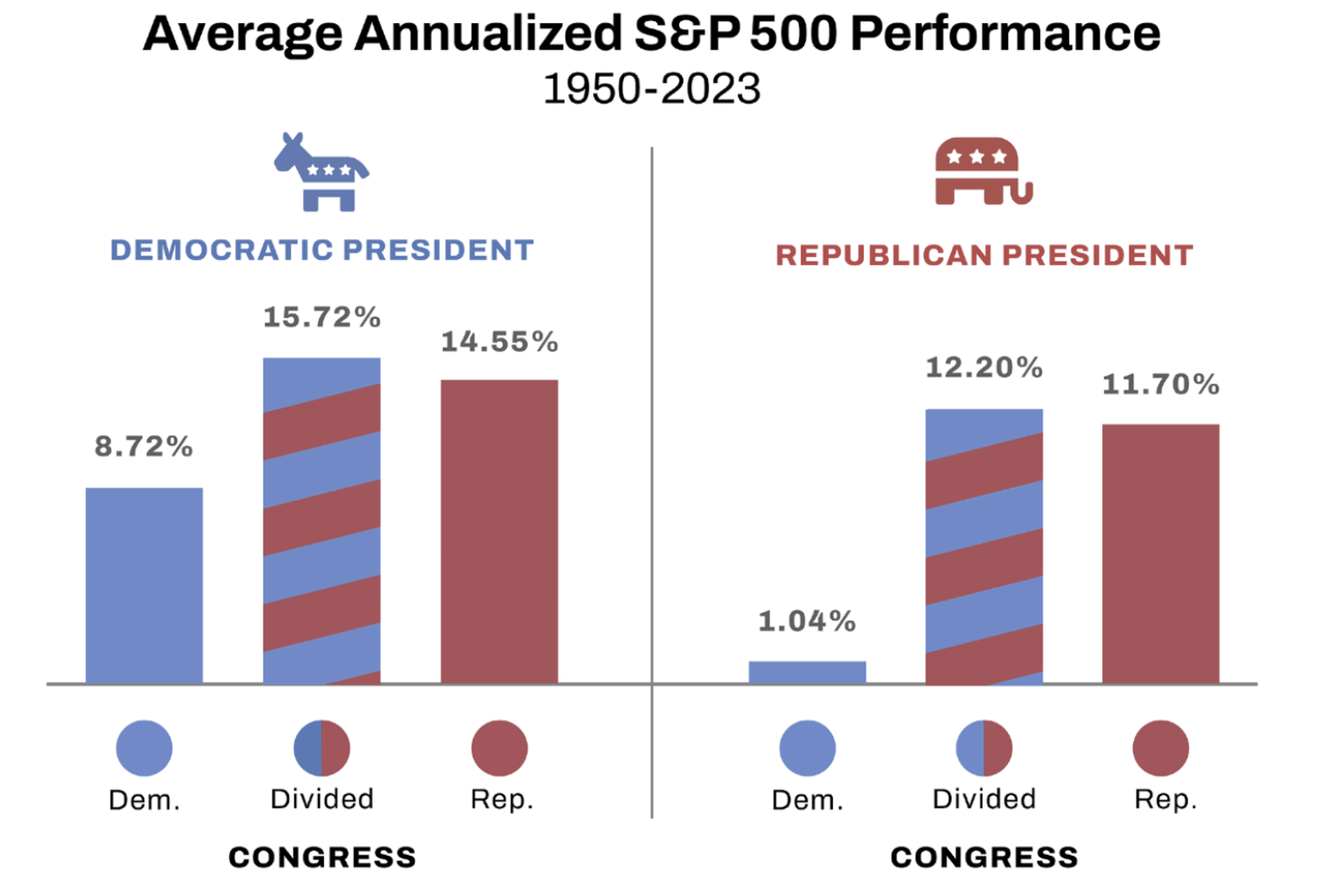
Figure 9. Darrow Wealth Management. Average Annualized S&P 500 Performance.
Government shutdown threats also do not tend to affect stocks beyond short-term volatility.
The effects of divided government vary significantly by sector. Defense contractors would likely see NDAA passage but face uncertainty on specific programs. Healthcare companies would see ACA subsidies and Medicare/Medicaid spending subject to intense negotiation. Financial services firms would face questions about regulatory appointments and enforcement priorities. Energy sectors would need to navigate climate and energy provisions, while technology companies could face unknown regulatory shifts in antitrust and privacy laws.
Overall, the effect of a split Congress on the economy is complex, and evidence is mixed about whether it hurts or helps overall. While a split government can lead to political dysfunction and reduced legislative output, it does not consistently lead to bad economic outcomes. Businesses should prepare for some uncertainty but may also benefit from potentially slower and more predictable policy shifts and stagnation.
7. Voter Issue Set: Likely Top Three Drivers in 2026
Issue 1: Inflation and Affordability
Affordability and cost-of-living concerns dominate voter priorities heading into 2026. A Politico poll from 2025 found that nearly half of Americans “find groceries, utility bills, health care, housing and transportation difficult to afford.” Among Latino voters, 53% cite cost of living and inflation as their leading concern. In addition, energy costs for gasoline, electricity, and home heating remain high, while insurance premiums for auto, home, and health coverage continue increasing.
Campaign dynamics are shaped by retrospective voting, where voters tend to blame the party in power for economic dissatisfaction, with narratives dominated by “how do you feel now, compared to two years ago” approaches. Democrats would likely argue that Trump promised to fix inflation but hasn’t delivered, or highlight specific cost issues under Trump’s administration. Republicans would defend Trump’s economic record, blame Democrats for creating inflation in the first place, highlight any economic improvements, and argue that Democratic control would make costs worse.
Public perceptions further complicate the political environment. 57% of Americans believe the country is in recession despite technical indicators suggesting otherwise, and this “perception gap” creates political vulnerability for the party in power, regardless of actual economic data. This gives Democrats a potential advantage as the opposition party. Yet there is more than just perception at play according to Mark Zandi at Moodys. The Figure 10 below shows there are 22 states in the US that are contracting or in a recession.
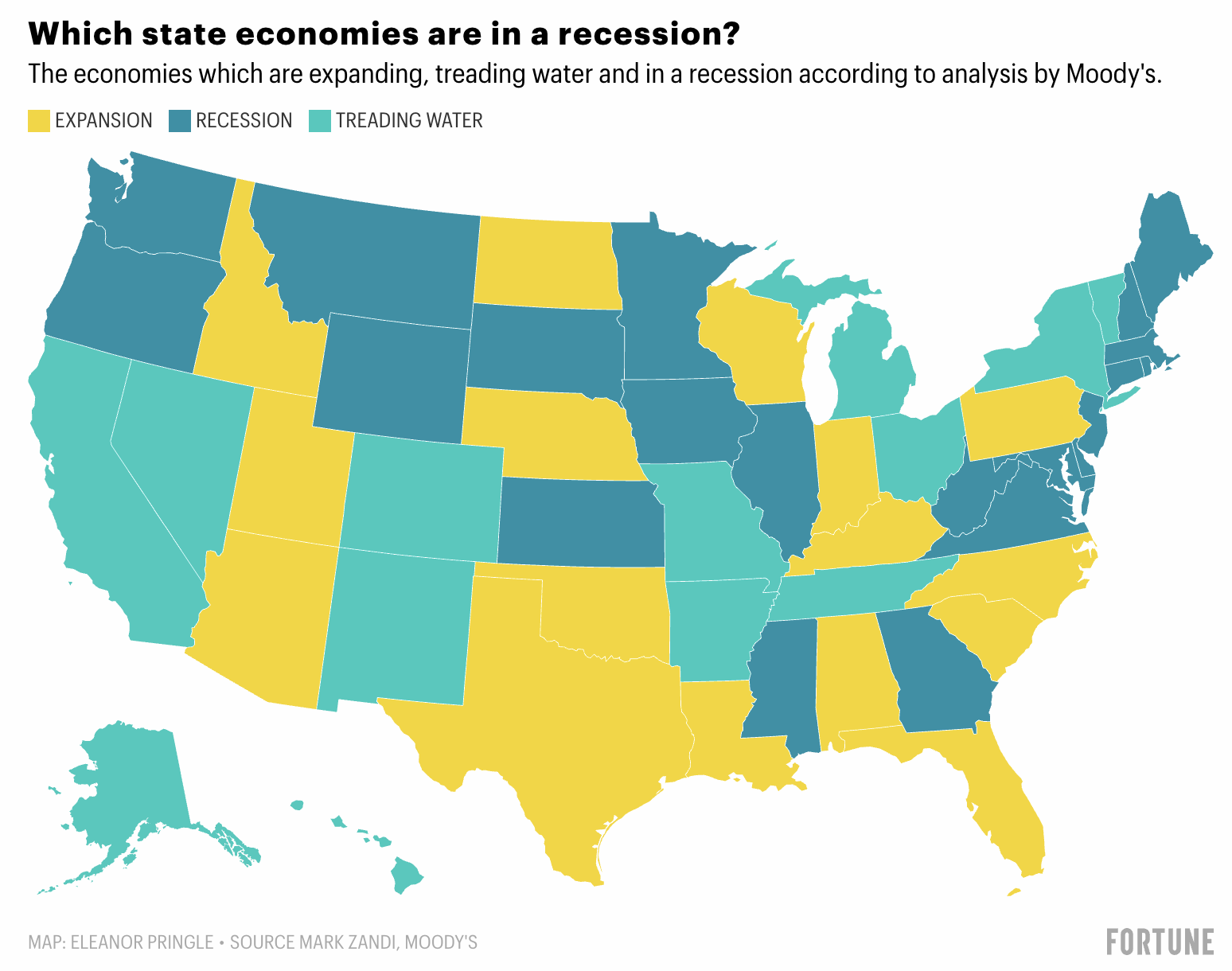
Figure 10: Source: Forbes
Issue 2: Jobs and Labor Market Confidence
Although headline employment indicators remain relatively strong, voter sentiment about the job market shapes electoral behavior. In addition, some indicators are somewhat conflicting or show different market forces at play simultaneously.
For example, the unemployment rate remains low by historical standards, but 2025 has been the weakest year of job growth since 2020. Figure 11 below illustrates recent job growth trends.
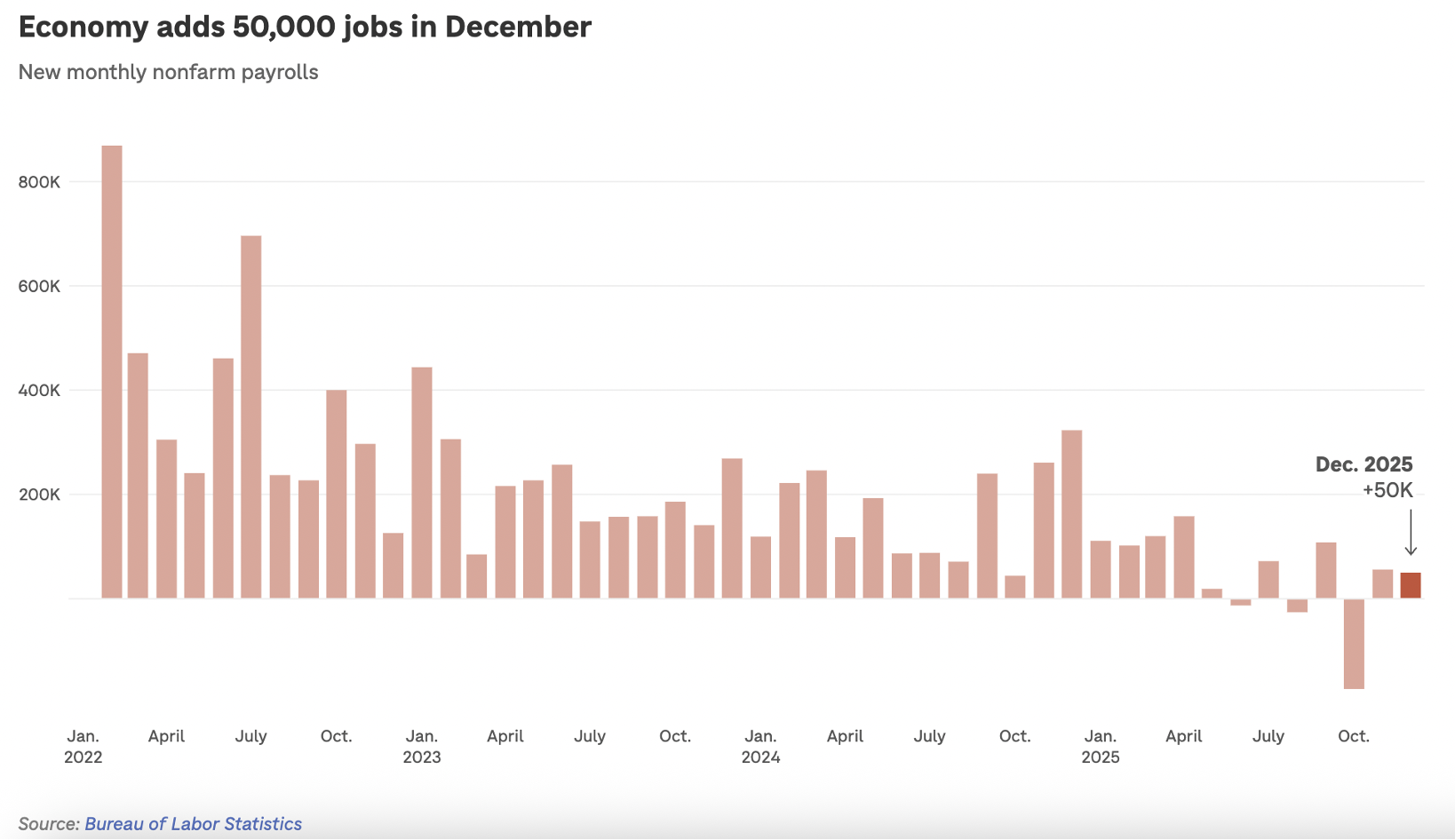
Figure 11. NPR. Economy adds 50,000 jobs in December
Wage growth has occurred, but purchasing power gains are debated, particularly for lower-income groups. From an electoral perspective, voter perceptions matter more than aggregate data. Voters consider whether jobs feel easy to find, whether layoffs appear likely, and whether entrepreneurs feel optimistic or pessimistic about hiring and investment.
Job market confidence influences elections in several ways. Economically secure voters are more likely to participate in elections, while job insecurity can suppress turnout among affected groups, and economic anxiety can fuel protest voting. Swing districts often have mixed economic profiles where small shifts in economic confidence can move decisive voters, and working-class and middle-class voters are especially sensitive to job market conditions.
Trump faces specific vulnerability from his economic promises, since he campaigned in 2024 on economic renewal and job creation. This means voters may evaluate whether promises were kept, and perceived low job and wage growth creates vulnerability for the Republicans. Sectoral variations matter significantly: manufacturing has been affected by trade policies and tariffs, the energy sector is navigating fossil fuel versus renewable transitions, technology is facing layoffs and restructuring, while service sectors are growing.
A compelling argument against the Trump Tariffs is what has happened to job growth since “Liberation Day.” The Figure 12 below shows jobs have mainly been created in the healthcare/social assistance sector and very few outside of it.
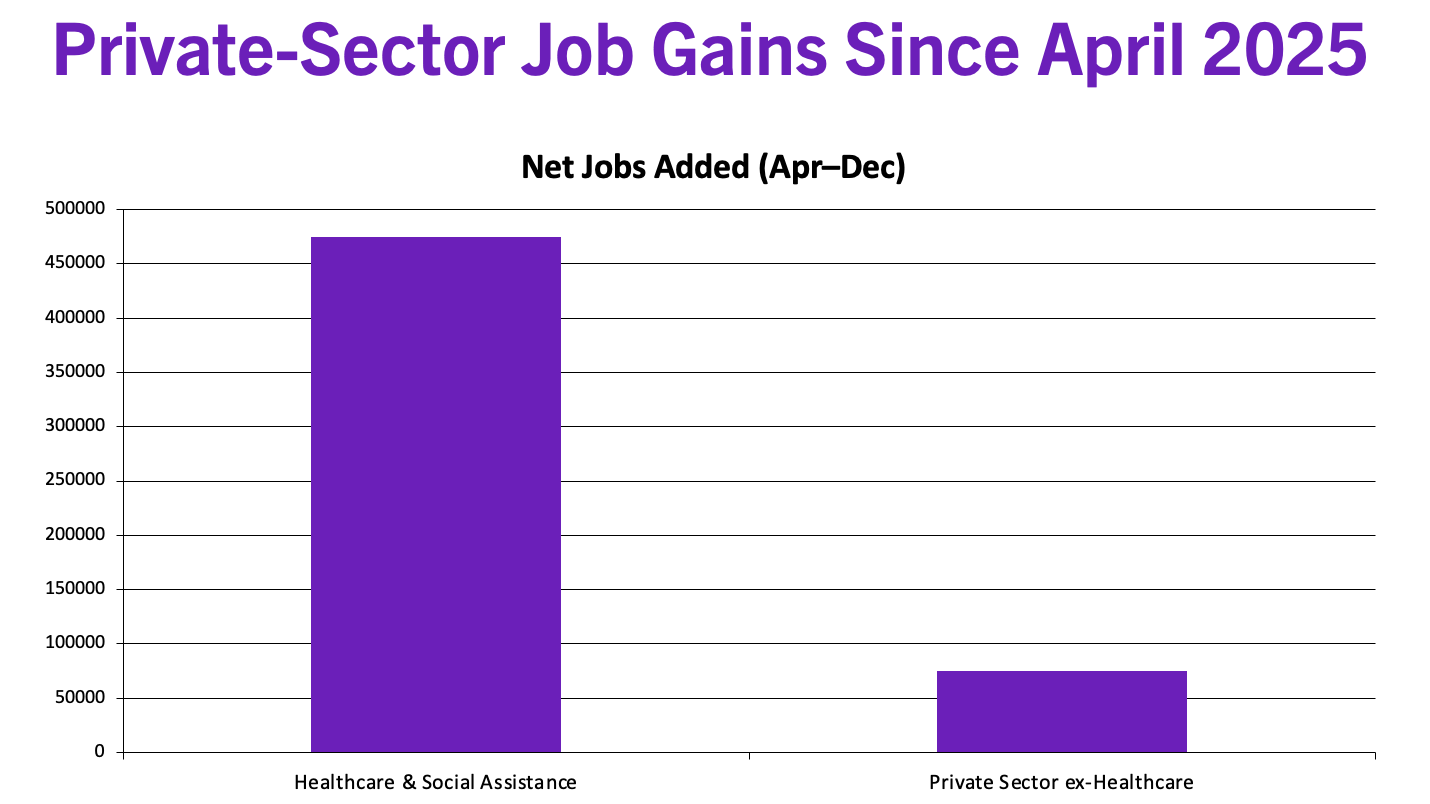
Figure 12: Source BLS
Issue 3: Social Policy with Emphasis on Immigration
Immigration remains a salient national issue. Polling from 2024 found that 28% cited immigration as the most urgent problem facing the country. In late 2025, immigration was still in the top 5 issues according to voters polled by Reuters / Ipsos. For Republicans, immigration was the second-most important issue at the end of 2025, only behind the economy and jobs, as shown in Figure 13 below.
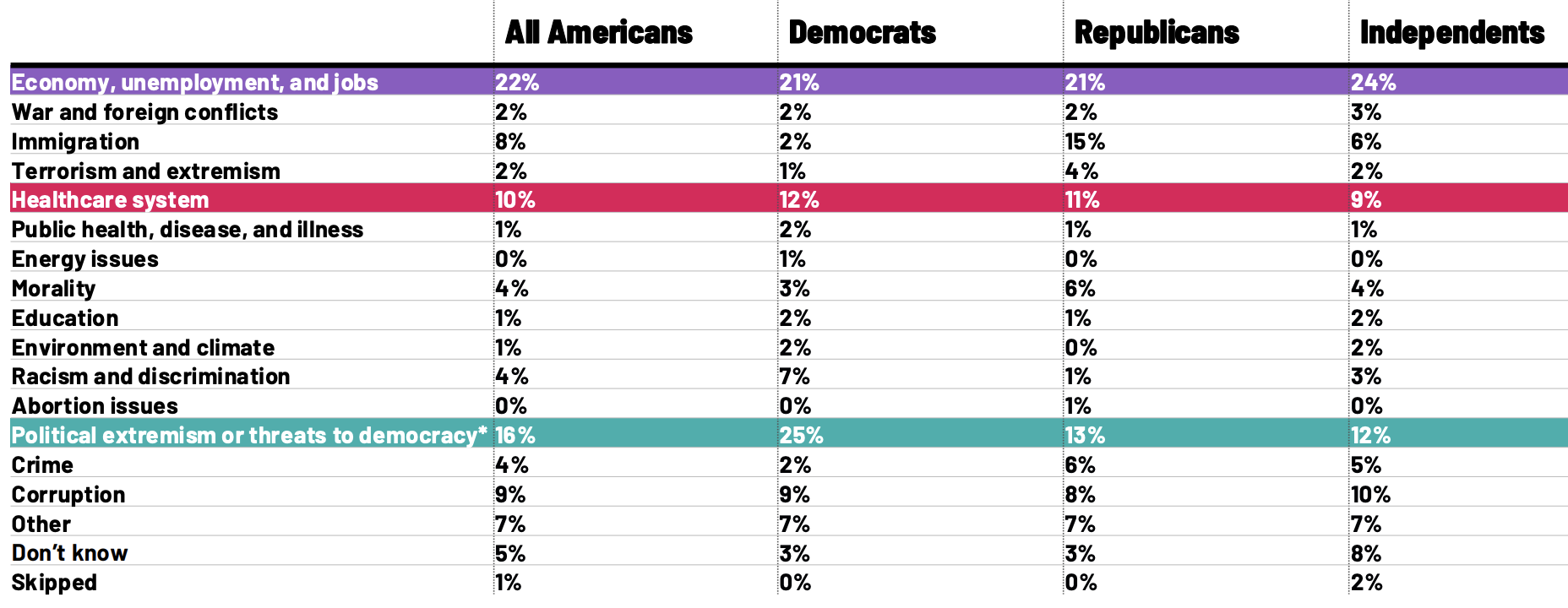
Figure 13. Reuters / Ipsos. Most Important Problem Facing America.
Despite its importance, public approval for the Trump administration’s handling of immigration has been decreasing. Key policy dimensions for the immigration issue include changes to border security, drug trafficking (including fentanyl), asylum processing capacity and backlog, and physical barriers and technology. ICE operations and deportations are also becoming an increasingly important political flashpoint. The recent killings of Alex Pretti and Renee Good have led to nationwide protests. It has also provided Democrats with an issue to remove funding for DHS/ICE/Border and led briefly to a government shutdown.
Legal immigration processes have also taken a hit recently, with new research finding that the “Trump administration’s policies will reduce legal immigration to the United States by 33% to 50% over four years.” This highlights the complexity and rapidly changing nature of this space.
Immigration has the possibility to nationalize races by evoking strong emotional responses across the political spectrum and can generate intense media coverage. Candidates can demonstrate “toughness” or “compassion” depending on their constituency. Most recently, the fatal shooting of Renee Good by an ICE agent in January 2026 generated controversy, and polling shows 55% say the Trump administration is “too harsh” in treating undocumented immigrants. In addition, concerns about civil liberties and racial profiling have increased. The Alex Pretti killing further galvanized polling against ICE/CBP tactics and against Republicans.
The Community-level impacts of immigration policy are significant. Among Latino voters, 41% fear they or someone close might be arrested despite having legal status, though economic concerns outweigh immigration for Latino voters overall. Immigration has the potential to mobilize voters on both sides, shape suburban swing voter preferences, affect Latino turnout and vote choice, and generate media coverage that dominates news cycles and can have follow-on effects on voting patterns.
8. “So What”?
The 2026 midterm elections matter because they will determine whether President Trump can govern effectively during his final two years in office or whether he becomes somewhat of a lame duck president. If Republicans maintain control of both chambers, Trump will retain the ability to pass legislation, confirm judges, and execute his policy agenda with minimal interference. If Democrats flip the House, Trump will face intense oversight, investigative scrutiny, and the practical end of his legislative agenda. It will slow his momentum and force issues to remain in the media impacting public opinion and the 2028 elections.
Despite this, the Trump administration’s reliance on Executive Orders could render some of these issues moot, with the President continuing to direct federal government operations as he sees fit.
For businesses and markets, a split Congress would likely produce legislative gridlock but also stability. Policy swings would be limited, although the risk of government shutdowns or debt ceiling crises would increase. A Democratic-controlled House would mean the end of friendly oversight and the beginning of aggressive investigations, shifting political attention and conversations from Trump’s agenda to the Democrats’ investigations of his conduct.
Final Thoughts
The 2026 midterm elections represent a high-stakes moment for American governance. With slim Republican majorities in both chambers, historical patterns strongly favoring the opposition party, and President Trump’s approval ratings in the low-to-mid 40s, Democrats appear well positioned to flip the House. Senate control is more uncertain due to map asymmetry favoring Republicans despite their need to defend more seats.
A divided government therefore appears the most likely outcome. While this would increase governance friction and policy uncertainty, historical evidence suggests it would not have major negative effects on the market or the broader economy. However, it will likely have a larger impact on the structure and functioning of the US government. The outcome will shape Trump’s final two years in office, set the stage for the 2028 elections and impact the country into the 2030s.