


This is a big deal
The U.S. Senate Banking Committee just passed a housing bill—unanimously. Yes, that’s right: 24-0. That kind of bipartisanship in 2025 is as rare as affordable homes in San Francisco.
This new legislation—the Renewing Opportunity in the American Dream to Housing Act of 2025, aka the ROAD Act—is the first major housing bill to clear the committee in 17 years. Sponsored by Sen. Tim Scott (R-SC) and Sen. Elizabeth Warren (D-MA), the bill bundles provisions from 27 previous bills into a broad reform package aimed at increasing housing supply, cutting costs, and reducing regulatory friction.
When interest rates and tariffs are hurting building, it couldn’t come at a more critical time for housing and the economy.
🏚️ The Problem: A Decade of Underbuilding
For years, I’ve argued in keynotes and research that the real issue in U.S. housing isn’t demand—it’s supply. Since the 2007–08 financial crisis, we’ve underbuilt by nearly 500,000 homes per year. The U.S. Chamber of Commerce estimates we’re now short 4.5 million homes. The bottlenecks? Local zoning, construction costs, and tariffs.
This bill tackles at least two of those three—and does it without simply throwing more federal money at the problem.
🚀 The Fix: Incentivizing Supply, Not Just Spending
The ROAD Act takes a market-driven approach, leaning on tax incentives and local deregulation to drive change. It’s not perfect—but it’s a meaningful step forward.
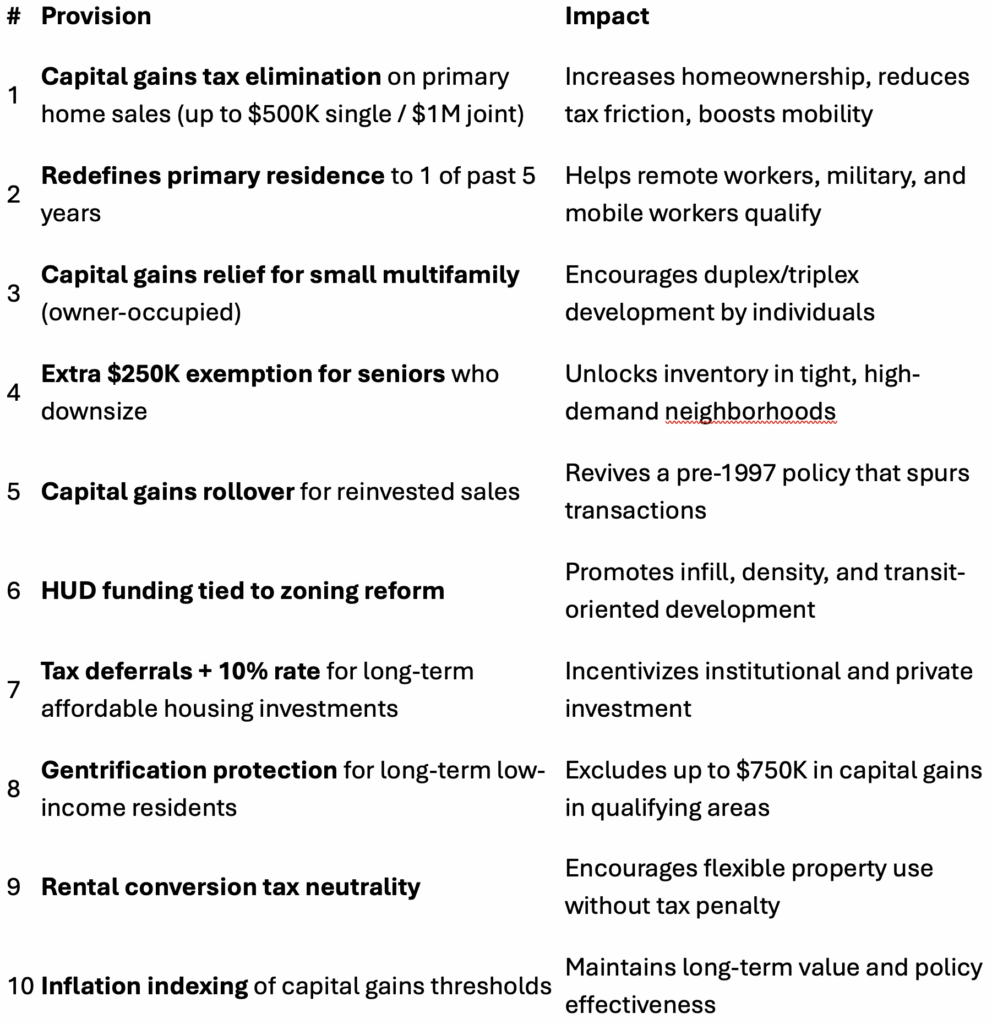
Below are the highlights:
🔟 Top 10 Provisions That Could Reshape Housing
🧱 Who’s Impacted—and How
This bill will ripple through nearly every corner of the housing industry:
- Homebuilders: Incentives and zoning changes = more permits, especially near transit.
- Real estate agents: More transactions from retirees, remote workers, and first-time buyers.
- Multifamily investors: New carve-outs make duplex/triplex development far more attractive.
- Affordable housing developers: 10-year tax deferrals + 10% rates = powerful ROI incentives.
- Seniors: Downsizing just got a whole lot more tax-efficient.
- Institutional capital: May create new investment models tied to long-term affordability.
📅 What Happens Next?
Expect this bill to move quickly through the Senate and the House. With election-year momentum and bipartisan backing, this bill could be on President Trump’s desk before November 4. If it passes, it would be the most significant federal housing reform in two decades.
🎯 Final Thought
For years, housing reform was stuck in political gridlock. The ROAD Act attempts break it open.
To be clear: this isn’t just a housing bill. It’s a productivity bill. It’s a mobility bill. And most of all, it’s a supply-side stimulus disguised as tax reform to drive building, address the US housing shortage and increase affordability by incentivizing economic behavior. It may be a first for Congress.